1. Introduction
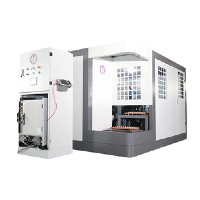
CNC grinding machines are vital in modern manufacturing. They ensure high precision and efficiency in producing intricate parts.
In this article, we will explore what CNC grinding machines are, how they work, and why they are indispensable for industries requiring tight tolerances.
You will learn about their types, applications, and the advantages they offer in production processes.
2. What is a CNC Grinding Machine?
2.1 Definition of a CNC Grinding Machine

A CNC grinding machine is a highly specialized machine tool that utilizes a rotating grinding wheel to remove material from a workpiece with exceptional precision. The term CNC stands for Computer Numerical Control, which signifies that the machine’s operations are automated and controlled by a computer system. This advanced technology ensures that the grinding process is highly accurate, efficient, and repeatable, which is particularly crucial for industries that demand the highest levels of precision in manufacturing.
In CNC grinding machines, the CNC system generates precise instructions that control the movement of the grinding wheel. These instructions direct the machine to grind the workpiece to exact specifications, ensuring tight tolerances are met. CNC grinding machines are invaluable in producing parts that require high dimensional accuracy and a smooth surface finish, such as gears, shafts, and bearings. The automation involved in CNC grinding also allows for consistent results across multiple production cycles, eliminating the variability seen in manual machining.
The CNC system operates through software that enables the machine to follow pre-programmed commands. These commands control the movement, speed, and depth of the grinding wheel. By following these specific parameters, CNC grinders can achieve a level of precision that manual grinding cannot match. This capability makes CNC grinding machines indispensable in industries such as aerospace, automotive, and medical device manufacturing, where precision is critical.
2.2 How CNC Grinding Machines Work
The operation of a CNC grinding machine revolves around the use of a rotating abrasive wheel to remove material from the workpiece. To begin, the workpiece is securely attached to the machine using a fixture or chuck. The grinding wheel, which is composed of hard, abrasive particles, rotates at high speeds to gradually wear away material from the workpiece’s surface.
The CNC system controls the precise movements of the grinding wheel, determining the speed, path, and depth of the cut. This level of control allows for high precision, ensuring that the workpiece conforms to the specified dimensions. A critical feature of CNC grinding is its ability to work on a variety of materials, including metals, ceramics, and composites, making it versatile for different applications.
Some key aspects of CNC grinding include:
● Grinding Wheel: The grinding wheel is the main tool in the grinding process. It rotates at a high speed and uses abrasive particles to remove material from the workpiece. The type of wheel selected depends on the material being ground and the desired finish.
● CNC Control System: The CNC system precisely controls the grinding wheel’s speed, path, and cutting depth. This allows for repetitive machining with high accuracy, ensuring that parts are produced to exact specifications.
● Cooling Systems: Grinding generates a considerable amount of heat, which can damage both the workpiece and the grinding tool. A coolant is used to dissipate heat, reduce friction, and prolong the life of the grinding wheel. It also helps maintain the accuracy of the grinding process by preventing thermal distortion.
CNC grinding is fully automated, meaning that operators can load the machine and let it run without needing to manually intervene for each part. This increases productivity and reduces the chance for human error. Additionally, automation ensures consistency in mass production, where identical parts are required.
2.3 Difference Between CNC and Manual Grinding Machines
CNC grinding machines offer several advantages over traditional manual grinding machines, especially in terms of precision, efficiency, and automation.
● Precision: CNC grinding machines provide a much higher level of precision compared to manual grinders. The movements of the grinding wheel are controlled by a computer, which can make adjustments down to microns, something that is difficult to achieve with manual grinding. This level of precision is essential for industries where tolerances are tight, such as aerospace or medical device manufacturing.
● Efficiency: One of the primary benefits of CNC grinding is its efficiency. CNC grinders can run continuously, grinding multiple parts without the need for constant supervision. This reduces production time significantly compared to manual grinding, where the operator must adjust settings and monitor the process for each part.
● Automation: CNC grinding machines are automated, meaning that the entire grinding process is programmed and executed by the computer system. This results in consistent output, reducing the risk of errors that can occur with manual grinding. In contrast, manual grinding requires skilled operators to constantly adjust the machine settings, which can lead to inconsistencies and longer production times.
3. Main Types of CNC Grinding Machines
CNC grinding machines come in various types, each designed for specific applications. Let’s look at the most common types:
CNC Grinding Machine Type | Common Applications |
Surface Grinder | Aerospace, automotive, and precision engineering |
Cylindrical Grinder | Manufacturing of shafts, rollers, and cylindrical parts |
Centerless Grinder | Small cylindrical parts like pins, rods, and bearings |
Internal Grinder | Bushings, bearings, and parts requiring tight diameters |
Specialized Grinders | Cutting tools, gears, and other precision components |
3.1 Surface Grinder
Surface grinders are used to produce flat surfaces with high precision. The grinding wheel is positioned vertically above the worktable, and the workpiece is moved beneath it. This type of grinder is ideal for producing smooth, uniform surfaces on components like plates, sheets, and other flat objects.
Surface grinding is widely used in industries that require components with tight flatness tolerances, such as aerospace and automotive sectors.
3.2 Cylindrical Grinder
Cylindrical grinders are used for grinding the outer and sometimes inner surfaces of cylindrical workpieces. This machine is particularly useful for manufacturing shafts, rollers, and other cylindrical components that require high precision.
The workpiece rotates between two grinding wheels, one for grinding and the other for supporting the workpiece. This ensures smooth, consistent results in high-precision parts.
3.3 Centerless Grinder
Unlike traditional grinders, centerless grinders do not require the workpiece to be mounted or centered. Instead, the workpiece is held in place by a regulating wheel and supported by a work rest blade. The grinding wheel then grinds the part without the need for a chuck or fixture.
This machine is perfect for high-speed, mass production of small cylindrical parts such as pins, rods, and bearings, as it reduces setup time and improves throughput.
3.4 Internal Grinder
Internal grinders are designed to grind the inner surfaces of a workpiece, which is essential for parts like bushings and bearings. These grinders are capable of producing smooth, highly accurate inner diameters and concentricity, which are critical for mechanical and automotive components.
Internal grinding requires precise control to ensure that the internal dimensions are met with tight tolerances.
3.5 Specialized Grinders: Tool Grinders, Gear Grinders, etc.
In addition to the standard types of CNC grinders, there are specialized machines that serve niche applications:
● Tool Grinders: Used to sharpen cutting tools like drills, end mills, and reamers, ensuring they remain sharp and effective.
● Gear Grinders: Used to finish gear teeth with high precision, ensuring proper tooth profile, pitch, and finish for smooth operation in machines.
These specialized grinders play a crucial role in industries where specific, highly detailed parts are required.
4. Applications of CNC Grinding Machines
CNC grinding machines are used in a wide variety of industries where precision and quality are paramount. Let’s explore some of the key applications:
4.1 Aerospace Industry
In the aerospace industry, CNC grinding machines are used to produce components like turbine blades, engine parts, and structural elements that require extreme precision. The high level of accuracy ensures the safety, reliability, and performance of aircraft and spacecraft.
4.2 Automotive Manufacturing
CNC grinding is crucial in automotive manufacturing, particularly in the production of engine components, gears, and shafts. The ability to grind complex parts with high precision ensures optimal performance and durability, contributing to the overall quality of the vehicle.
4.3 Medical Device Industry
The medical device industry requires CNC grinding for producing surgical instruments, implants, and prosthetics. The precision of CNC grinding ensures that these devices are functional, comfortable, and safe for patients.
4.4 Precision Engineering
CNC grinding is extensively used in precision engineering for the manufacture of molds, dies, and other intricate components. These industries require parts with tight tolerances, and CNC grinders provide the necessary accuracy to meet these demands.
5. Advantages of CNC Grinding Machines
CNC grinding machines offer numerous advantages that make them essential in modern manufacturing:
5.1 High Precision and Consistency
CNC grinders can achieve extremely tight tolerances, often within microns, ensuring parts are produced with the same high quality every time. This consistency is crucial for industries where quality control is paramount.
5.2 Automation and Reduced Human Intervention
With CNC grinding, the process is automated, reducing the need for human intervention. This minimizes errors and enhances efficiency, allowing machines to run continuously, which is ideal for mass production.
5.3 Ability to Grind Complex Geometries
CNC grinding machines are capable of grinding complex shapes and intricate features that would be difficult or impossible with traditional grinding methods. This makes them versatile for various applications, from basic grinding to specialized operations.
5.4 Material Versatility
CNC grinding machines can handle a wide range of materials, from metals and ceramics to composites. This versatility makes them suitable for industries dealing with diverse materials, including aerospace, automotive, and medical sectors.
6. Operational and Maintenance Tips for CNC Grinding Machines
To ensure optimal performance, CNC grinding machines require proper operation and regular maintenance:
6.1 Operational Best Practices
To maximize efficiency and precision, operators should:
● Ensure proper machine setup, including accurate alignment and calibration.
● Regularly check for wear and tear on the grinding wheel.
● Monitor the coolant system to prevent overheating.
6.2 Maintenance and Calibration
Regular maintenance is crucial to extend the life of a CNC grinding machine and maintain its accuracy:
● Perform routine cleaning to remove debris and maintain optimal machine performance.
● Calibrate the machine regularly to ensure it stays within the required tolerance limits.
● Replace grinding wheels and other consumable parts as necessary to maintain grinding quality.
7. Future Trends in CNC Grinding Machines
CNC grinding technology continues to evolve, with several advancements on the horizon:
7.1 Technological Advancements
New developments in CNC grinding will likely focus on increasing automation, precision, and speed. These improvements will help manufacturers meet the growing demand for high-precision parts while reducing cycle times.
7.2 Integration of AI and Smart Manufacturing
Artificial intelligence (AI) and smart manufacturing systems are expected to play a significant role in the future of CNC grinding. AI could enhance the grinding process by optimizing parameters in real time, further improving accuracy and efficiency.
8. Conclusion
CNC grinding machines are crucial in modern manufacturing for achieving high precision and efficiency. These machines ensure tight tolerances and high-quality finishes, which are essential for industries like aerospace, automotive, and medical devices.
Yatai Polishing Machine Co., Ltd. offers advanced CNC grinding machines that provide exceptional value. Their products enhance productivity, delivering consistent, high-quality results while minimizing human error.
FAQ
Q: What is a CNC grinding machine?
A: A CNC grinding machine is a computer-controlled machine tool that uses a rotating grinding wheel to precisely remove material from a workpiece, achieving high precision and smooth finishes.
Q: How does a CNC grinding machine work?
A: A CNC grinding machine works by using a rotating abrasive wheel to remove small amounts of material from a workpiece. The CNC system controls the speed, path, and depth of the grinding wheel for precise results.
Q: What are the advantages of using a CNC grinding machine?
A: CNC grinding machines offer high precision, automation, and consistency, allowing manufacturers to achieve tight tolerances and superior surface finishes with minimal human intervention.
Q: How much does a CNC grinding machine cost?
A: The cost of a CNC grinding machine varies depending on the complexity, size, and features. Entry-level machines can start around $10,000, while advanced models can exceed $500,000.
Q: What industries use CNC grinding machines?
A: CNC grinding machines are used in industries such as aerospace, automotive, medical devices, and precision engineering, where high-quality, accurate parts are essential.