Here are the 10 important accessories you need for your metal polishing machine:
Buffing wheels
Polishing compounds
Sandpaper grades
Safety flanges
Extender kits
Taper adaptors
Microfiber and blue shop towels
Lubricants and sealants
Buffing adapters and goblets
Cleaning tools for buffing wheels
You want your metal polishing kit to work well. Each part in the kit helps your polishing machine do a better job. These parts also keep you safe while you polish metal. They help stop injuries from happening. If you do not use these accessories, you could hurt your hands or arms. You might get hurt by flying pieces or lose control of the machine. Always put on your safety glasses before you start polishing metal. Your polishing kit helps you work faster. It also keeps your metal polishing machine working smoothly.
Key Takeaways
Pick the right buffing wheels and polishing compounds for each metal. Use the right ones for each polishing step. This helps you get a smooth and shiny finish.
Get metal surfaces ready with the correct sandpaper grits. Start with rough sandpaper and move to smoother ones. This stops scratches and damage.
Always wear safety gear when you polish. Use safety flanges to keep buffing wheels tight. This helps stop accidents while polishing.
Extender kits and taper adaptors help you reach small spaces. They let you change tools safely. This gives you better control and makes polishing better.
Clean your buffing wheels with wire brushes and rakes. Use microfiber towels to protect metal and keep it shiny.
Buffing Wheels for Metal Polishing Machine
Types and Materials
When you make your polishing kit, you need to choose buffing wheels. Each kind works best for a certain job. Here are some you might use:
Cotton and muslin buffs make metal shiny. You use them with buffing compounds for the last step.
Felt buffs help polish small corners and flat spots. They work well for knives and tools.
Sisal wheels are strong. You use them to cut and polish hard metals like stainless steel.
Satin or matte buffs use fake fibers. These give metal a soft, brushed look.
Aluminum oxide flap wheels and silicon carbide wheels help grind and smooth metal.
Nylon and wire wheels clean and remove rough edges.
You can see how each wheel fits in your kit in the table below:
Buffing Wheel Type | Material/Composition | Typical Use in Metal Polishing |
Cotton and Muslin Buffs | Soft cotton fabric | Final polish, high shine |
Felt Buffs | Compressed wool fabric | Tight angles, flat surfaces |
Sisal | Natural fiber | Cutting, hard metals |
Satin/Matte Buffs | Synthetic or nylon fibers | Satin or matte finishes |
Aluminum Oxide Flap Wheels | Aluminum oxide abrasive | Deburring, polishing non-ferrous metals |
Silicon Carbide Wheels | Silicon carbide abrasive | Grinding, smoothing metals |
Nylon and Wire Wheels | Nylon, brass, steel bristles | Brushing, deburring, rough surface cleaning |
Choosing the Right Size
You want your machine to work well. The size of your buffing wheels is important. For stainless steel, 8-inch airway buffing wheels are a good pick. They keep cool and help you polish faster. Use different compounds with each wheel for better results. Start with black emery compound for cutting. Then use brown Tripoli for color buffing. Finish with green rouge for the final shine. Always match the wheel size to your machine and the metal you polish.
Maintenance Tips
If you want your kit to last, take care of your buffing wheels. Clean them often to get rid of old compounds and dirt. Check for damage before you start. Store wheels in a dry place with covers. Balance your wheels to stop shaking. Use the right compounds so wheels last longer. Dress the wheels to show fresh abrasive. Lubricate cotton wheels with wax or grease if needed. Handle wheels gently and follow safety steps when you change them. Good care helps your machine work better and keeps you safe.
Tip: Always check your buffing wheels before you polish. This easy step can stop accidents and help you get a better finish.
Polishing Compounds for Metal Polishing
Common Types
You need the right polishing compound in your polishing kit to get a smooth, shiny finish. Each compound works best for a certain stage of metal polishing. Tripoli is a cutting compound. You use it first to remove scratches and dull marks from aluminum, brass, or copper. After Tripoli, you switch to rouge compounds for the final shine. Jeweler’s rouge, like green or blue, gives you a mirror finish on aluminum and other non-ferrous metals. Brown Tripoli works well for softer metals, while white rouge is great for harder metals like chrome.
Here’s a quick guide to help you pick the best compound for your polishing kit:
Buffing Stage | Recommended Compounds | Purpose |
Cut Buffing | Black Emery, Brown Tripoli | Removes scratches, prepares surface |
Color Buffing | White Rouge, Green/Blue Rouge | Final polish, mirror finish |
Polishing | Coarse abrasives | Smooths surface before buffing |
If you want a high-gloss finish on aluminum, use a soft cloth buffing wheel with a medium grease compound. Store unused compounds in airtight containers to keep them fresh.
Application Tips
You want your metal polishing kit to work fast and clean. Start by sanding your metal with high grit sandpaper. Use 1200, 1500, then 2000 grit. Next, apply brown Tripoli compound with a buffing wheel. Buff the surface gently. Switch to a rouge compound for the final polish. Use a clean wheel for each compound to avoid mixing. For a quick shine, try Quick Sheen All Metal Polish. Wipe it on with a soft cloth, let it dry, then buff it off. You can use a buffing wheel for tough spots. This method helps you avoid black grease marks and keeps your metal clean.
Tip: Always use a small amount of polishing compound. Too much can leave streaks and make a mess.
Safety Notes
You need to stay safe when you use chemical polishing compounds. Work in a space with good airflow. Wear gloves to protect your skin. Always follow the instructions on the compound container. Use safety glasses and a mask if you see dust. Never breathe in the dust from polishing. Keep your polishing kit away from kids and pets.
Note: Store your polishing compounds in airtight containers if you do not use them for a month. This keeps them fresh and ready for your next metal polishing job.
Sandpaper Grades
Surface Preparation
You want your metal polishing kit to deliver a smooth, shiny finish. The first step is always surface preparation. You start by removing dents and scratches with coarse sandpaper. This gets rid of big flaws and sets up your metal for polishing. Move to medium grit sandpaper next. This step helps you even out the surface and makes it ready for fine polishing. Clean the metal between each sanding stage. Dust and old grit can mess up your results. If you see any leftover marks, repeat the sanding process until the metal looks smooth. When you finish, wipe the surface clean and get ready for the next step in your polishing kit.
Tip: Careful surface prep means fewer scratches and a better final shine when you polish.
Grit Selection
Picking the right sandpaper grit makes a huge difference in metal polishing. You need to match the grit to your metal and your goal. Coarse grits like 40-60 work best for stripping paint or heavy sanding. Medium grits, usually P100 to P220, are perfect for prepping metal before polishing. Fine grits, starting at P240 and going up to P400 or higher, help you get that smooth, shiny finish. Softer metals like aluminum need finer grits so you don’t scratch them. Harder metals such as steel or titanium can handle coarser grits and tougher abrasives. Always start with a coarse grit for big jobs, then move to medium and fine grits for polishing. Using the wrong grit can damage your metal and shorten the life of your polishing kit.
Here’s a quick table to help you choose:
Metal Type | Recommended Grit Range | Abrasive Type |
Aluminum, Copper | P240+ | Silicon Carbide |
Steel, Titanium | P100-P220 | Aluminum Oxide/Zirconia |
Brass | P240+ | Silicon Carbide |
Usage Tips
You want your polishing kit to work as hard as you do. Always start with the lowest grit you need and move up step by step. Don’t skip grit stages. If you jump from coarse to fine, you might leave deep scratches that are tough to remove. Use water as a lubricant when sanding. This keeps the metal cool, reduces dust, and stops the sandpaper from clogging. For aluminum, stick with finer grits and wet sanding to avoid scratches. For steel, begin with coarser grits and keep the surface cool. Sand in the direction of the grain for stainless steel. Use gentle pressure and keep the sandpaper moving. If you press too hard, you can warp the metal or leave uneven marks. Clean the surface after each sanding step. This helps your metal polishing kit give you the best results.
Start with 600-grit sandpaper for polishing, then move to 1000 or 2500 grit for a mirror finish.
Use aluminum oxide sandpaper for hard metals.
Use silicon carbide sandpaper for softer metals.
Always use water or lubricant to prevent overheating.
Note: Careful sanding and cleaning between steps will help your polishing kit last longer and give you a flawless finish every time.
Safety Flanges
Preventing Wheel Slippage
You want your metal polishing machine to be safe. Safety flanges help keep it that way. These parts hold buffing wheels tight while you work. If you polish at high speeds, wheels might slip or fall off. Safety flanges stop this from happening. They give you extra protection. You can focus on polishing and not worry about accidents.
They hold buffing wheels in place when you polish.
They stop wheels from slipping or flying off fast.
They fit many buffing wheel sizes for different jobs.
You can put them on and take them off easily.
Tip: Always look at your safety flanges before you polish. Checking them quickly can stop dangerous wheel slips.
Installation Tips
You want your safety flanges to work every time. Putting them on the right way is important. If you mess up, you could get leaks or break your machine. Here are some things to remember:
Line up the flange the right way. Bad alignment can cause leaks.
Tighten bolts evenly. If one side is tighter, the gasket can break.
Use a star or cross pattern to tighten bolts. This spreads pressure out.
Pick the right gasket for heat and pressure. The wrong one can leak.
Do not scratch or dent the flange when you install it.
Use lubrication to make fitting easier and stop leaks.
Check flanges for damage or wear. Replace bad ones before you polish.
Use tools that stop rust and keep flanges strong.
Note: Lining up flanges and tightening bolts right helps you make a strong seal. Good installation keeps you safe and helps you polish better.
Extender Kits
Improving Accessibility
You know how tough it can be to reach small corners or tight spaces when polishing metal. Extender kits make this job much easier. These kits give you extra reach, so you can polish spots that your machine cannot touch on its own. For example, Adam's SK Pro Micro Rotary Attachment Accessories come with an extension shaft and small polishing pads. You can use pads as tiny as half an inch. The kit even has a five-foot cable. This lets you move your polisher into tricky areas like inside car trim or around gauge clusters. You do not have to struggle or twist your hands into odd angles. The Stanley 3-piece Extension Bar Set also helps. It gives you three different lengths—3, 6, and 10 inches. You can pick the right size for each job. These tools let you polish every part of your project, even the hardest-to-reach places.
Tip: Use extender kits when you need to polish inside holes, around bolts, or in deep grooves. You will get a smoother finish without missing any spots.
Safety Benefits
Extender kits do more than just help you reach. They also keep you safe while polishing. When you use an extender, you can keep your hands farther from spinning wheels and hot surfaces. This lowers your risk of cuts or burns. You do not have to force your machine into tight spaces, so you avoid slips and accidents. The extra length gives you better control. You can polish with steady hands and less strain on your wrists. Some kits even have grips or covers to stop your hands from slipping. You stay comfortable and safe, even during long polishing sessions.
Note: Always check that your extender kit fits your machine before you start polishing. A good fit means safer, smoother work.
Taper Adaptors
Angle Grinder Conversion
You might want to turn your angle grinder into a metal polishing tool. Taper adaptors make this possible. These small parts connect your angle grinder spindle to buffing wheels. You can use your angle grinder for polishing jobs without buying a new machine.
Here’s what makes taper adaptors so useful:
They let you attach buffing wheels to your angle grinder.
You can use different polishing accessories with your grinder.
They fit many common spindle sizes, like M14 x 85mm, M14 x 104mm, and 5/8"-11UNC x 114mm.
You get more use out of your angle grinder.
When you use a taper adaptor, always check the speed. Keep your angle grinder under 3000 RPM during polishing. This helps you stay safe and get a better finish. If you go too fast, you might damage your buffing wheel or the metal.
Tip: Always wear safety glasses and gloves when you use your angle grinder for polishing. Safety comes first!
Compatibility Notes
Not all taper adaptors fit every angle grinder. Before you buy one, check your grinder’s spindle size. Most adaptors list the sizes they fit. If you pick the wrong size, your buffing wheel might not stay on tight. That can be dangerous.
You should also check the type of buffing wheel you want to use. Some wheels need a certain adaptor shape or length. Make sure the adaptor matches both your grinder and your wheel. If you are not sure, ask the seller or check your machine’s manual.
Match the adaptor to your grinder’s spindle thread.
Make sure the adaptor fits your buffing wheel.
Test the fit before you start polishing.
Note: A good fit means safer, smoother polishing and less trouble while you work.
Microfiber and Blue Shop Towels
Cleaning and Maintenance
You want your metal to look great after polishing. Microfiber towels help you clean without leaving streaks or lint. These towels soak up water and polish in one wipe. The soft fibers pick up dirt and dust, not just move it. You can use them wet or dry for cleaning. Blue shop towels are good for many cleaning jobs. They come in different colors, so you know which towel to use. This stops you from mixing up chemicals and keeps your area safe.
Here’s why microfiber towels are great for cleaning polished metal:
No lint means your metal stays spotless.
Soft fibers do not scratch your metal.
Special weave grabs dirt and leftover polish.
Smooth or stitched edges protect your metal.
Different weaves work for different cleaning jobs.
Tip: Always use a fresh microfiber towel for each step. This keeps your polish looking good and stops mixing dirt.
Towel Type | Best Use | Special Features |
Microfiber | Final wipe after polish | Lint-free, ultra-absorbent |
Blue Shop Towel | General cleaning | Color-coded, non-abrasive |
Surface Protection
You want to keep your metal safe while you clean. Microfiber towels have tiny fibers that grab dirt and water. These fibers are much thinner than hair. When you wipe with microfiber, you lift dirt off the metal. This helps stop swirl marks and scratches. Good towels have soft fibers and smooth edges. You do not have to worry about scratching your metal. Cheap towels with rough edges or tags can scratch your metal. Always pick high-quality towels for the best care.
Soft fibers stop damage when you polish.
Smooth edges or no tags lower scratch risk.
Thick towels hold dirt and water away from metal.
Wash towels before using to keep them soft and safe.
Note: Good microfiber towels help you wipe off wax and polish without hurting your metal’s shine. You get a perfect finish every time.
Lubricants and Sealants
Enhancing Finish
You want your polished metal to look great and stay safe. Lubricants and sealants help you get a perfect finish. Lubricants keep the metal cool when you polish. They also help stop scratches. This makes polishing easier and safer. Many metal polishes have lubricants inside.
Here are some things you should look for:
Lubricants: These stop the metal from getting too hot. They help prevent scratches while you polish.
Waxes and Sealants: These make a layer that keeps dirt away. Cleaning is easier with this layer.
Corrosion Inhibitors: These protect your metal from rust. They leave a thin shield after you finish polishing.
Specialty Sealants: Products like ProtectaClear and Everbrite Coating give a strong, clear layer. This layer protects against tarnish, fingerprints, and scratches.
Tip: Always use a clean, soft cloth to put on lubricants or sealants. This helps you avoid streaks and keeps your finish looking nice.
Product Type | Main Benefit | Example Products |
Lubricant | Stops heat and scratches | Metal polish with oils |
Wax/Sealant | Keeps dirt off, adds shine | Carnauba wax, sealants |
Corrosion Inhibitor | Stops rust and oxidation | Inhibitor sprays |
Specialty Sealant | Lasts long, clear protection | ProtectaClear, Everbrite |
Maintenance Advice
You want your metal to stay shiny and safe for a long time. Sealants last about three to six months. You should put them on again every season, or four times a year. This keeps your metal safe from dirt, water, and fingerprints. Some coatings last even longer, up to three years. If the shine fades or the surface feels rough, polish again before adding a new coat.
You do not need to polish all the time. Once or twice a year is enough for most projects. If you use lubricants when you prep, you do not need to add more unless you polish again.
Note: Regular care with lubricants and sealants makes cleaning easier and keeps your metal looking new. Set a reminder to check your finish every few months so you do not forget.
Buffing Adapters and Goblets
Versatility
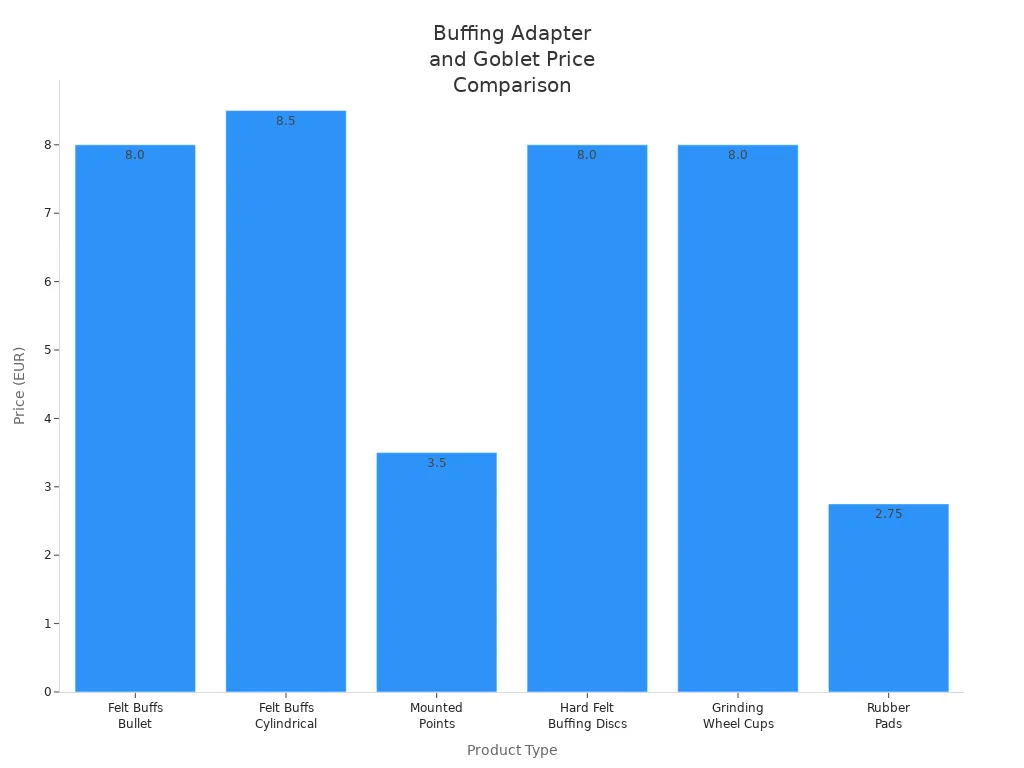
You want your CNC metal polishing machine to handle every job you throw at it. Buffing adapters and goblets give you that flexibility. These tools come in many shapes and sizes, so you can polish flat surfaces, tight corners, or even tricky curves. You can swap out a bullet-shaped felt buff for a cylindrical one when you need to reach deep grooves. Hard felt discs work well for large, flat areas. Grinding wheel cups help you tackle rough spots fast. Rubber pads act as a soft base for polishing discs, making them perfect for delicate finishes.
Here’s a quick look at some of the most versatile options you can add to your kit:
Product Type | Shape/Type | Size | Packaging | Price Range | Application/Notes |
Felt Buffs | Bullet shape | 30mm | 10 pcs | ~€8.00 | Versatile polishing for micro die grinders |
Felt Buffs | Cylindrical | 30mm | 10 pcs | ~€8.50 | Detailed metal polishing |
Mounted Points | Cylindrical & Bullet | 3mm | 10/100 pcs | €3.50/€30.75 | Precision polishing and finishing |
Hard Felt Buffing Discs | Disc | 30mm | 5 pcs | ~€8.00 | Durable buffing for metal surfaces |
Grinding Wheel Cups | Cup | 30mm | 5 pcs | ~€8.00 | Grinding and polishing |
Rubber Pads | Pad | 30mm | Single | ~€2.75 | Backing for polishing discs |
You can see that these adapters and goblets fit micro die grinders, but they also work great with CNC metal polishing machines. This means you get more value from your accessories.
Tip: Keep a mix of shapes in your toolbox. You’ll always have the right tool for any buffing challenge.
Efficiency Tips
You want to finish your polishing jobs quickly and get a perfect shine every time. Buffing adapters and goblets help you do just that. Start by picking the right shape for your project. Use bullet-shaped buffs for corners and edges. Choose discs or cups for flat surfaces. Always check that your adapter fits tightly before you start. A loose fit can cause wobbling and ruin your finish.
Try these tips to boost your efficiency:
Use a separate buffing adapter for each compound. This keeps your colors clean and prevents scratches.
Clean your goblets after each use. This helps them last longer and keeps your results consistent.
Store your adapters in a dry place. Moisture can cause rust and shorten their life.
Switch out worn goblets right away. Fresh tools give you a smoother finish.
Note: If you keep your adapters and goblets in good shape, your buffing jobs will always look professional.
Cleaning Tools for Buffing Wheels
Keeping your buffing wheels clean is the secret to getting a perfect shine every time. If you let old compound or metal bits build up, your buffing will look uneven. You might even scratch your project. That’s why you need the right cleaning tools in your kit.
Wire Brushes
Wire brushes help you clean your buffing wheels fast. When you use a wire brush, you scrub away old polishing compound, metal shavings, and hardened gunk. This stops the wheel from getting clogged. A clean wheel gives you a smooth, even finish. You also avoid mixing different compounds, which can ruin your shine.
You can use a hand wire brush or a brush that attaches to your machine. Just hold the brush against the spinning wheel for a few seconds. The brush will pull out the dirt and leave your wheel looking fresh. Always wear gloves and safety glasses when you do this.
Tip: Clean your buffing wheels with a wire brush before you switch to a new polishing compound. This keeps your results bright and consistent.
Buffing Wheel Rakes
Buffing wheel rakes work like magic erasers for your wheels. You press the rake against the spinning wheel, and it scrapes off hard, stuck-on compound. This keeps the surface soft and ready for more buffing. If you use the same wheel for different compounds, a rake helps you avoid contamination.
You should dedicate each buffing wheel to one compound. But if you need to clean off old residue, a rake is your best friend. It helps your wheels last longer and keeps your polishing results even.
Cleaning Tool | What It Removes | When to Use |
Wire Brush | Compound, metal shavings | Before/after each session |
Buffing Wheel Rake | Hardened residue, buildup | When wheel feels clogged |
Note: Clean wheels mean better buffing and less waste. Make cleaning part of your routine for the best results.
Using the right accessories on your CNC metal polishing machine helps you work safely. It also makes your jobs faster and gives your metal a nice shine. When you look over your machine and add new parts, you can find problems early. This helps you stop big repairs before they happen. Here’s how regular care helps you:
Cleaning and adding lubricant every day stops damage. It keeps your machine working well.
Checking and changing old parts makes your tools last longer.
Looking at coolant and changing filters keeps your machine safe. It also helps you get better results.
Spend a few minutes checking your accessories and cleaning your machine. You will get better work, save money, and your machine will last a long time!
FAQ
What is the best way to clean buffing wheels?
You should use a wire brush or a buffing wheel rake. Hold the tool against the spinning wheel for a few seconds. This removes old compound and metal bits. Clean wheels give you a smoother, shinier finish.
How often should I replace polishing compounds?
Replace your polishing compounds when they dry out or get hard. If you notice they do not work as well, it is time for new ones. Store them in airtight containers to keep them fresh longer.
Can I use any towel for wiping polished metal?
No, you should use microfiber or blue shop towels. Regular towels can scratch your metal or leave lint. Microfiber towels pick up dirt and polish without harming the surface.
Do I need to use safety flanges every time?
Yes, always use safety flanges when you attach buffing wheels. They keep the wheels secure and help prevent accidents. Safety flanges protect you from flying wheels and slips.
What grit sandpaper should I start with for metal polishing?
Start with a coarse grit like P100 if your metal has deep scratches. Move to finer grits like P400 or P1000 for a smooth finish. Always work from coarse to fine for the best results.