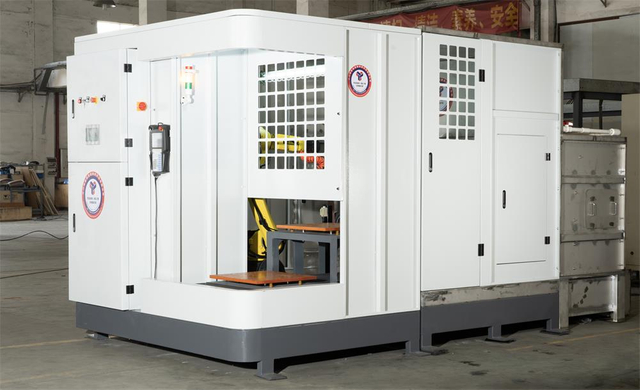
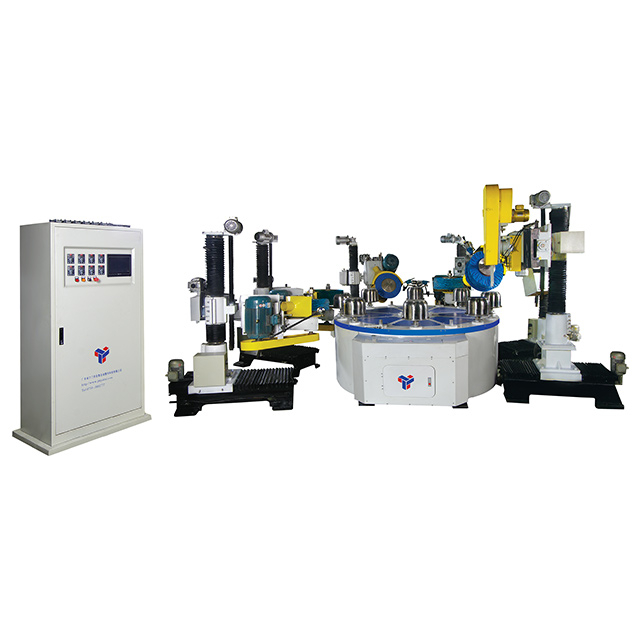
Manufacturers of premium locks and architectural hardware face a harsh operational reality. Rising labor costs, high turnover in hazardous polishing roles, and an uncompromising market demand for absolute aesthetic consistency across production batches drive the need for change. Manual finishing processes simply cannot scale efficiently without introducing unacceptable variations in surface quality. The core business problem lies in scaling production for complex geometries—such as levers, push/pull handles, and intricate rosettes—without compromising the strict visual and dimensional tolerances required in the high-end market.
Transitioning to automated Door Handle Surface Finishing is a necessary evolution for scaling operations. This guide evaluates robotic systems, tooling integration, metallurgical variables, and the criteria for selecting the right integration partner to modernize your finishing line.
Automating door handle surface finishing shifts production bottlenecks from manual labor availability to machine cycle times, drastically reducing scrap rates and rework.
Successful implementation requires matching the robotic articulation, tooling configurations (part-to-tool vs. tool-to-part), and abrasive media to the specific material (e.g., brass vs. stainless steel) and desired finish (e.g., mirror polish vs. brushed metal).
Process development should not rely on guesswork; collaboration with abrasive application engineers and rigorous physical part-testing is essential to validate cycle times before capital commitment.
Evaluating an automated system must include a comprehensive operational cost analysis, factoring in abrasive media consumption, changeover times, and safety compliance, not just initial CapEx.
Table of Contents
Toggle
The Business Case for Automating Door Handle Surface Finishing
Overcoming Manual Finishing Limitations
Manual polishing carries hidden costs that erode profit margins on every batch. Operators face severe ergonomic risks on the floor. Carpal tunnel syndrome and hand-arm vibration syndrome lead to high turnover and increased workers' compensation claims. Human operators cannot maintain perfectly consistent applied pressure over an eight-hour shift. This physical fatigue translates directly into uneven finishes, altered dimensional tolerances, and high scrap rates on premium materials.
Maintaining a skilled, OSHA-compliant labor force for these repetitive, high-friction, and high-dust tasks is becoming nearly impossible. The tribal knowledge required to properly blend a stainless steel lever handle often walks out the door when senior polishers retire. Automation captures this tribal knowledge in code, ensuring that the hundredth part looks exactly like the first.
Defining Success Criteria for Automation
To evaluate a successful transition to automated finishing, you must establish clear baseline metrics. Target cycle times per unit, required surface roughness (Ra) parameters, and acceptable defect rates must be strictly defined before evaluating equipment. Calculating the break-even point requires a direct comparison between current manual throughput, associated labor and scrap costs, and the projected yields of the automated system.
Metric
Manual Finishing Baseline
Automated Finishing Target
Cycle Time (Brass Lever)
3-5 minutes per part
45-60 seconds per part
Surface Roughness (Ra)
Highly variable (operator dependent)
Consistent < 0.1 µm (Mirror)
Scrap/Rework Rate
8% - 12%
< 1%
Consumable Waste
High (manual compound application)
Low (precise automated dosing)
Core Technologies in Automated Surface Processing
Robotic Polishing and Buffing Cell Configurations
The architecture of the robotic cell dictates its capability to handle specific hardware designs. You must match the kinematics of the robot to the geometry of the part.
Part-on-Robot (Part-to-Tool)
In this configuration, a 6-axis robot manipulates the door handle against stationary, double-ended buffing wheels or abrasive belt units. This setup is ideal for complex, multi-sided geometries like curved levers and intricate rosettes. The robot presents every facet of the part to the abrasive media precisely. It allows for rapid repositioning and complex pathing around tight internal radii.
Tool-on-Robot (Tool-to-Part)
For exceptionally heavy or large architectural hardware components, such as massive commercial pull plates, it is often more practical for the robot to guide the finishing spindle or abrasive tool over a stationary part. This approach reduces the payload requirements on the robot arm and simplifies fixturing for bulky items.
Active Force Control & Compliance
Active force control is mandatory for consistent results. Force-torque sensors and active compliance devices (pneumatic or electric) ensure the robot maintains consistent pressure against the part. This compensates for abrasive wheel wear and slight variations in handle casting tolerances. Without active compliance, a rigid robot path will either over-polish a slightly oversized casting or miss the surface entirely on an undersized one.
Automated Brushing Systems for Directional Finishes
Achieving a superior brushed metal finish on brass and stainless steel handles requires specific tooling setups. The selection of abrasive belts, contact wheels, flap wheels, and non-woven abrasives determines the final grain structure. The rubber durometer of the contact wheel dictates the aggressiveness of the cut. Automated systems precisely control the spindle speed and contact pressure to create perfectly parallel, uniform directional lines that manual operators struggle to replicate consistently.
Mass Finishing vs. Robotic Articulation
Mass finishing techniques, such as vibratory or centrifugal disc finishing, are excellent for bulk deburring, radiusing, and surface preparation of small, uniform parts like lock cylinders or internal hinge components. However, for the final aesthetic polishing and directional brushing of prominent door handles, robotic cells are necessary. Only 6-axis robotic articulation provides the precise control required for high-end visual finishes on complex exterior hardware.
Evaluating System Capabilities for Locks and Architectural Hardware
Handling Diverse and Complex Geometries
Automated systems must efficiently manage high-mix production runs common in Locks Architectural Hardware manufacturing. This includes processing tubular handles, flat push/pull plates, door stoppers, window pulls, and intricate lock escutcheons. End-of-arm tooling (EOAT) is a major engineering focus. Custom pneumatic grippers and specialized fixturing securely hold the hardware during aggressive polishing without marring pre-finished or semi-finished surfaces. Soft jaws or custom-molded urethane nests are often deployed here.
The automated finishing line must seamlessly couple with upstream manufacturing processes like casting, forging, and machining. A robust system automatically removes casting parting lines, gates, forging flash, and machining marks. This prepares the surface perfectly before moving into the final aesthetic finishing stages. If you fail to remove a parting line completely in the prep stage, the final mirror buff will only highlight the defect.
Material-Specific Finishing Requirements
Different metals demand distinct abrasive sequences and processing parameters. You cannot run brass and stainless steel using the same wheel speeds or compound formulations.
Brass
Brass requires specific abrasive sequences, typically moving from coarse-to-fine belts followed by sisal and cotton buffing. Strict heat management is required to prevent discoloration, warping, or zinc bleed-out. If the part gets too hot during the buffing stage, the zinc within the brass alloy migrates to the surface, leaving a cloudy, milky finish that cannot be plated over.
Stainless Steel
Stainless steel architectural hardware necessitates aggressive cutting to remove initial imperfections. This is followed by multiple blending stages using non-woven abrasives to eliminate scratch patterns and achieve a flawless brushed or mirror finish. Stainless requires high horsepower spindles to maintain torque under heavy cutting loads.
Zinc Die-Cast
Zinc die-cast components require delicate preparation to remove parting lines and surface porosity. The process must be carefully controlled to avoid breaking through the dense outer skin of the casting. If you polish through this skin, you expose the porous interior, which will trap plating acids and cause blistering down the line.
Integration with Downstream Processes
The finishing cell does not operate in isolation. It must integrate efficiently with subsequent steps. Parts exiting the polishing cell are covered in buffing compound residue. The system must hand off parts directly to ultrasonic cleaning lines, physical vapor deposition (PVD) plating racks, clear-coating (lacquering) stations, and final assembly, ensuring a smooth flow of materials through the facility.
Cost-to-Value and ROI Influencing Factors
CapEx vs. OpEx in Robotic Finishing
Evaluating an automated system requires analyzing both the initial capital expenditure and the ongoing operating expenses. CapEx includes the robot arm, safety enclosure, active force devices, dust collection systems, and offline programming software. OpEx includes abrasive media, liquid buffing compounds, utility power, and replacement filter elements for the dust collector. Understanding this balance ensures the system remains profitable over its lifecycle.
Scalability and Changeover Efficiency
In high-mix, low-volume manufacturing environments typical of decorative hardware, changeover times significantly impact profitability. If it takes four hours to swap fixtures and load a new program for a batch of 50 handles, the automation loses its value. Quick-change modular fixturing, zero-point clamping systems, and offline programming (OLP) software are vital for minimizing machine downtime when switching between different handle designs.
Consumable Optimization
Automated systems optimize consumable usage drastically. Precise, high-pressure spray application of liquid polishing compounds ensures exact dosing directly onto the buffing wheel at the optimal millisecond. This reduces compound waste by up to 50% compared to manual application methods, where operators often over-apply solid bar compound, leading to massive waste and harder cleaning cycles.
Implementation Risks and Mitigation Strategies
Programming and Path Generation Challenges
Complex manual path teaching for new handle designs can cause excessive downtime. Using a teach pendant to map out a complex curved lever handle point-by-point takes days. To mitigate this risk, manufacturers should utilize advanced offline programming (OLP) software. OLP uses CAD models to generate and simulate collision-free robot paths before physical deployment. You can program the next batch while the robot is currently running production.
Dust Collection, Safety, and Compliance
Metal dust presents severe safety risks, including combustibility and respiratory hazards. Mixing dust from aluminum, brass, or steel in the same ductwork is a recipe for a catastrophic fire. Mitigation requires installing NFPA/OSHA-compliant wet dust collection systems. Spark detection sensors, explosion-proof enclosures, and strict housekeeping protocols ensure a safe working environment.
Managing Abrasive Wear and Consistency
Finish degradation occurs as abrasive belts wear, slip, or stretch during continuous production. A fresh 120-grit belt cuts very differently than a belt that has processed 200 parts. Implementing automated tool-wear compensation algorithms, belt tracking sensors, and automatic media replacement protocols ensures consistent finish quality. The robot automatically adjusts its approach vector to compensate for the reduced diameter of a worn buffing wheel.
Eliminating Guesswork via Expert Partnerships
Process development should never rely on trial and error on your shop floor. Collaborate directly with premium abrasive manufacturers and application engineers to perform lab-based process development. Establishing verified abrasive recipes, spindle speeds, and grit sequences before finalizing the cell design guarantees performance upon installation.
Conclusion
The stabilization of unit costs, drastic reduction in scrap, and the guarantee of aesthetic consistency make automation mandatory for scaling premium locks and architectural hardware production. Decision-makers should prioritize integrators who offer transparent physical testing, possess deep expertise in active force control, and collaborate actively with major abrasive manufacturers to engineer custom process recipes.
As a leading innovator in automated surface finishing engineering, Yatai specializes in developing precision robotic cells tailored for high-end architectural hardware. Our advanced turnkey systems incorporate sensitive active compliance technology and strict NFPA-compliant extraction to help global manufacturers systematically eliminate manual processing errors and reliably scale production output.
To modernize your facility, take the following immediate actions:
Initiate a time-and-motion study on your current manual polishing processes to establish a firm baseline for throughput and scrap rates.
Gather 3D CAD files of your highest-volume and most complex handle geometries to share with potential integration partners.
Audit your current dust collection infrastructure to determine if it meets NFPA standards for combustible metal dust.
Contact robotics integrators to schedule a physical part-finishing trial using your actual raw castings.
FAQ
Q: What is the typical ROI timeline for an automated door handle finishing cell?
A: A standard ROI timeline is typically 18 to 24 months. This is heavily driven by labor savings, increased throughput, drastic scrap reduction on expensive metals like brass, and significant consumable savings.
Q: Can one robotic cell handle both mirror polishing and brushed metal finishes?
A: Yes. Robots utilizing automatic tool changers (ATC) or multi-station cells can seamlessly transition from abrasive belt grinding for brushed finishes to buffing wheels for mirror polishing within the same cycle.
Q: How does automation handle variations in casting tolerances?
A: Automated cells use active force control devices and force-torque sensors. These systems dynamically adjust the robot's position to maintain consistent pressure against the part, compensating for slight dimensional variations in the raw castings.
Q: What safety measures are required for polishing brass and steel?
A: NFPA/OSHA-compliant wet dust collection systems are mandatory to mitigate the risk of combustible metal dust. Spark detection and explosion-proof enclosures are also critical safety components to prevent facility fires.
Q: Is offline programming necessary for high-mix production?
A: Yes. Offline programming (OLP) software allows engineers to generate and simulate robot paths using CAD models without stopping production, minimizing downtime during changeovers for different handle designs.
Q: How do automated systems grip complex lever handles without damaging them?
A: Integrators design custom end-of-arm tooling (EOAT) using soft jaws, pneumatic grippers, or custom-molded urethane nests. These fixtures securely hold the part from internal cavities or non-cosmetic surfaces to prevent marring.