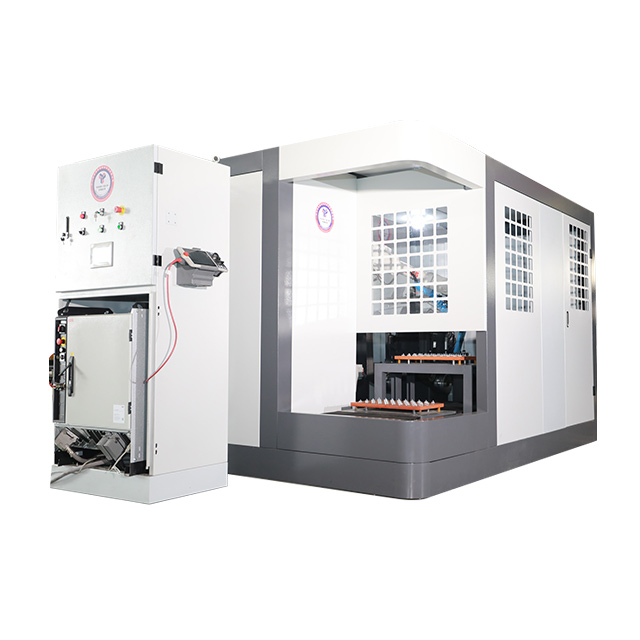
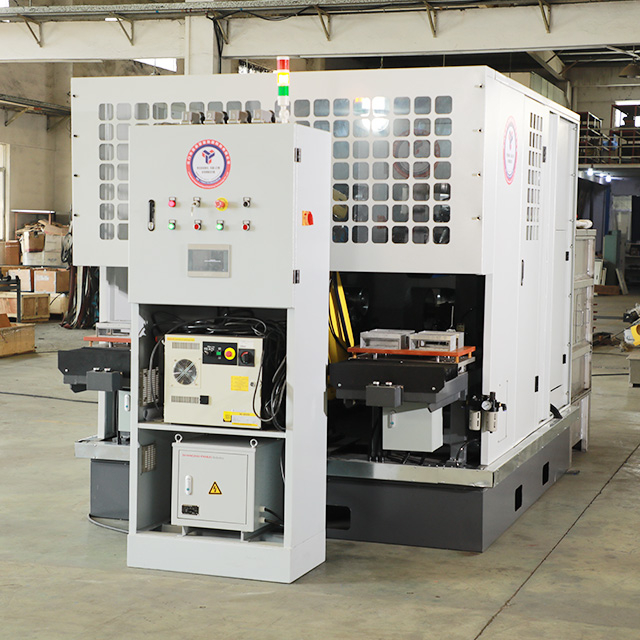
Surface finishing remains the most critical bottleneck and quality variable in bathroom hardware manufacturing. Manual polishing operations face compounding challenges on the factory floor. Manufacturers deal with severe skilled labor shortages, inconsistent surface quality leading to high plating rejection rates, and significant occupational health and safety liabilities regarding metal dust exposure. Relying on human operators to maintain exact pressure across complex faucet curves over an eight-hour shift guarantees microscopic inconsistencies. Transitioning to an automated bathroom hardware polishing system mitigates these risks immediately. However, this transition requires rigorous technical evaluation. Selecting the right Robot Polishing Machine depends on matching robotic payload, force control, and programming capabilities to your specific fixture geometries and production volumes. A properly integrated system transforms finishing from a variable art into a highly controlled, repeatable manufacturing process.
Consistent Surface Preparation: Automated polishing ensures uniform material removal, drastically reducing rejection rates during subsequent chrome plating or PVD coating processes.
Active Force Control is Non-Negotiable: For complex bathroom fixtures (like curved faucet bodies), active force compliance is required to maintain consistent abrasive contact without altering the component's structural geometry.
Programming Efficiency Dictates ROI: High-mix, low-volume manufacturers must prioritize systems with Offline Programming (OLP) to minimize downtime during product changeovers.
Safety and Compliance: Modern robotic polishing cells must integrate ATEX-certified dust extraction to safely manage combustible metal particulate generated from brass, zinc, and stainless steel.
Process Versatility: A complete robot polishing machine must accommodate both high-gloss mirror finishes (for chrome/PVD plating) and directional satin/brushed finishes (for brushed nickel or bronze).
Table of Contents
Toggle
The Business Case for Automating Bathroom Hardware Finishing
Defining Success Criteria in Surface Finishing
Success in automated finishing relies on strict baseline metrics. You must measure cycle time reduction, abrasive consumable optimization, and first-pass yield improvement. Manual errors carry heavy production costs. Over-polishing ruins expensive brass castings, sending them straight to the scrap bin. Under-polishing leaves microscopic scratches that cause severe plating defects, including blistering and pitting after the chrome bath. When you evaluate a finishing line, the primary goal is stabilizing the output quality.
Engineers must define strict post-polishing roughness targets. These Ra (Roughness Average) values determine whether a part is ready for direct-to-plating applications or Physical Vapor Deposition (PVD) processes. For instance, a direct-to-chrome brass faucet typically requires an Ra value below 0.05 micrometers. Achieving a consistent Ra value across thousands of parts is impossible without mechanical precision. Automation standardizes this metric, ensuring every piece of hardware meets the exact surface smoothness required for flawless coating adhesion. We often see manufacturers drop their plating rejection rates from 15% down to under 2% simply by stabilizing the pre-plate surface preparation.
Overcoming Labor and Safety Bottlenecks
Manual grinding and buffing create severe occupational health hazards. Operators frequently suffer from repetitive strain injuries (RSI) due to the constant vibration and heavy physical exertion required to push metal against a spinning wheel. The physical toll means experienced polishers age out of the workforce, and younger generations avoid these roles entirely. Furthermore, respiratory hazards from airborne brass and zinc dust present massive liability issues for facility managers. Even with standard PPE, long-term exposure remains a significant risk factor.
Implementing automation serves as a direct risk mitigation strategy. It ensures occupational health compliance by removing human workers from the most dangerous environment on the production floor. This shift stabilizes your workforce. You eliminate the constant turnover associated with grueling manual polishing jobs, allowing you to retrain staff for safer, quality-control-oriented roles. Instead of managing physical fatigue, your operators manage machine performance and abrasive life cycles.
Core Technologies in a Robot Polishing Machine
6-Axis Robotic Arm Configurations
Modern bathroom faucets and handles feature complex contours, deep undercuts, and sharp internal angles. Reaching these areas requires the full articulation of a 6-axis robotic arm. Standard Cartesian or SCARA robots simply lack the rotational flexibility to follow the organic curves of contemporary sanitary ware. The six axes allow the tool center point to maintain a perpendicular orientation to the surface at all times, which is necessary for even material removal.
Facility engineers must choose between two primary setup configurations. In a robot-held workpiece system, the robot grips the fixture and moves it against stationary abrasive belts and buffing wheels. This works best for smaller, lighter parts like handles and spouts. Conversely, a robot-held tool system clamps the heavy fixture in place while the robot wields the polishing wheel. This approach handles massive shower columns and heavy brass manifolds effectively. The choice dictates your entire cell layout and safety enclosure design.
Active vs. Passive Force Compliance
Maintaining exact pressure against the abrasive surface dictates the final finish quality. Passive compliance relies on mechanical springs or pneumatic cylinders to absorb excess pressure. While functional for flat, simple parts, passive systems fail when processing intricate bathroom hardware designs. They cannot adjust quickly enough to changing surface topologies, often resulting in rounded edges where sharp design lines should exist.
Active force control uses sensor-driven feedback loops. The robot continuously measures the resistance encountered at the tool center point and adjusts its position in milliseconds. This technology is mandatory for curved, asymmetrical surfaces. It ensures the abrasive wheel applies the exact same pressure on the peak of a faucet spout as it does in the deep valley of the handle base. Without active force control, you will inevitably burn through the softer areas of a brass casting.
Multi-Station Integration: Grinding, Deburring, and Polishing
A single automated cell usually handles the entire surface preparation sequence. The progression starts with heavy deburring to remove casting parting lines and sprue marks. Next, coarse grinding belts flatten the raw cast surfaces, removing major porosity. You might start with an 80-grit belt and step down to a 400-grit belt across three different stations.
The robot then moves the part to sisal wheels for intermediate smoothing, cutting down the heavy scratch marks left by the belts. Finally, cotton buffing wheels combined with liquid compounds deliver the final high-gloss finish. Integrating all these steps into one continuous robotic cycle eliminates work-in-progress inventory and drastically cuts total manufacturing time. The part enters the cell as a raw casting and exits ready for the plating racks.
Multi-Finish Process Capabilities
Consumer trends demand diverse hardware aesthetics. A robust Robot Polishing Machine transitions seamlessly from mirror-buffing for polished chrome to uniform directional scratching for brushed nickel, satin brass, and oil-rubbed bronze. You cannot afford to buy separate machines for every finish type.
Achieving this versatility requires precise control over multiple parameters. The system must adjust spindle speed, contact wheel durometer, and robot travel speed on the fly. Maintaining grain consistency across different finishes means the robot must apply exactly the same linear stroke pattern on every single piece, something manual operators struggle to replicate consistently. For brushed finishes, the abrasive flap wheel must engage the surface at a highly specific angle to create the desired scratch pattern without digging into the base metal.
Evaluation Dimensions: Matching the Machine to the Production Floor
Payload Capacity, Reach, and End-of-Arm Tooling (EOAT)
Calculating the required robotic payload involves more than just weighing the part. You must factor in the weight of the heaviest brass fixture, the mass of the pneumatic or mechanical gripper, and the dynamic forces applied during the polishing cycle. Pushing a part hard against a grinding belt generates significant resistance that the robot's motors must overcome. If you select a robot with a 20kg payload for a 15kg part and gripper combo, the dynamic forces will trigger motor overload faults constantly. Always build in a 40% safety margin for payload.
Reach requirements depend entirely on your cell layout. The robot must access multiple grinding and buffing stations without re-gripping the part. Furthermore, evaluate quick-change gripper designs. Bathroom hardware comes in hundreds of form factors. Tool-less, rapid-swap EOAT allows operators to switch from running shower heads to sink handles in minutes. We recommend utilizing zero-point clamping systems on the robot wrist to ensure repeatable tool center point accuracy after every changeover.
Software and Programming Complexities
Programming efficiency dictates machine uptime. Manual teach pendant programming involves physically jogging the robot point-to-point. This method suits high-volume, low-mix production where the machine runs the same faucet body for months. However, it requires taking the machine out of production for days just to teach a new path.
High-mix production environments require Offline Programming (OLP) software. OLP allows engineers to generate CAD-to-path trajectories on a computer while the robot continues polishing other parts on the floor. This prevents machine downtime during programming and dramatically accelerates the introduction of new hardware designs into the manufacturing schedule. You simply import the 3D model, select the surfaces to polish, and the software generates the complex 6-axis code automatically.
Environmental and Safety Compliance (Dust Extraction)
Polishing metal generates highly combustible dust. Assess the integration of wet dust collectors and ATEX or NFPA-compliant extraction systems immediately during the planning phase. Dry collection systems pose severe explosion risks when handling certain metal particulates. A spark from a grinding belt can easily ignite a dry dust bin, leading to catastrophic facility damage.
Highlight the risks of cross-contamination. Polishing mixed materials in the same cell requires strict protocol. Switching between brass, zinc, and stainless steel without cleaning the extraction ducting creates volatile dust mixtures. Proper environmental controls protect your facility from fires and ensure compliance with local industrial safety regulations. Ensure your ducting features smooth interiors to prevent dust accumulation in the bends.
Material and Component-Specific Polishing Realities
Component Geometry: Faucets vs. Towel Bars, Hooks, and Knobs
Different hardware classes present unique handling challenges. Organic, curved geometries like faucets and mixer valves require constant tool-orientation adjustments. The robot must continuously pivot to maintain normal force vectors against the wheel. If the angle deviates, the wheel will cut a flat spot into the curve.
Long, slender geometries like towel bars and grab bars face deflection issues. When pushed against a belt, they vibrate and bend. These parts require specialized steady-rests or dual-gripping strategies to remain rigid. Conversely, small, intricate geometries like robe hooks and lever handles require high-density nesting. Precision grippers are necessary to hold them firmly without the clamping mechanism damaging the delicate surface. You might need custom urethane-cast gripper jaws to hold these parts securely without scratching them.
Brass and Zinc Alloy Fixtures
Brass and zinc are relatively soft metals commonly used in sanitary ware. They require delicate handling during the abrasive process. Aggressive grinding easily destroys the design intent, flattening curves that should be round or rounding off edges that should be sharp. Heat buildup can also cause zinc to smear rather than cut cleanly.
Robotic active force control prevents this gouging. By maintaining a highly sensitive, consistent pressure, the robot preserves sharp design lines and intricate details prior to electroplating. This precision ensures the final plated product matches the original CAD model perfectly. You must also select the correct abrasive compounds; using a compound designed for steel will aggressively over-cut brass fixtures.
Stainless Steel Components
Polishing 304 and 316 stainless steel shower heads and grab bars introduces high heat generation. Stainless steel is significantly harder than brass, leading to rapid abrasive wear and thermal distortion if not managed correctly. The metal can warp or discolor if the polishing wheel dwells in one spot for too long.
To achieve a mirror finish on stainless steel, evaluate the need for automated liquid compound application. High-pressure spray guns mounted near the buffing wheels inject cooling polishing compounds directly into the contact zone. This manages the heat buildup, extends wheel life, and prevents the metal surface from burning. You will also need higher horsepower spindle motors to maintain wheel speed when pushing hard against stainless steel.
Implementation Risks and Mitigation Strategies
Facility Footprint and Integration Downtime
A major implementation risk is underestimating the required floor space. A complete cell includes the robot, heavy safety fencing, multiple abrasive stations, compound delivery systems, and large dust collection units. Cramping this equipment leads to maintenance nightmares. If an operator cannot easily access the back of a belt stand, they will neglect routine maintenance.
Mitigate this risk by utilizing 3D cell simulation software prior to purchase. Have the integrator build a virtual model of your exact floor space. This verifies the layout, ensures smooth material flow in and out of the cell, and guarantees maintenance personnel have adequate clearance to change belts and wheels safely. Plan for forklift access to remove heavy dust collection bins.
Operator Skill Transition
The knowledge gap between a skilled manual polisher and a robotic cell operator can derail an automation project. Manual polishers understand metal behavior, but they do not intuitively understand coordinate systems, fault codes, or HMI interfaces. Throwing a manual worker in front of a robot pendant without support leads to frustration and machine crashes.
Partner exclusively with integrators that offer comprehensive, on-site training. The training must cover daily HMI operation, safe abrasive replacement procedures, and basic path troubleshooting. Empowering your existing finishing experts to run the robotic cell ensures you retain critical material knowledge while upgrading your technological capabilities. They know what a good finish looks like; you just need to teach them how to make the robot achieve it.
Conclusion
Transitioning to automated surface finishing is a multi-layered strategic decision that directly determines your plant's competitiveness, yield rate, and operational safety boundaries. A robot is only as effective as the processing parameters, force compliance, and safety infrastructure built around it.
As a premier pioneer in industrial automation and surface treatment engineering, Yatai delivers highly advanced, custom-engineered robot polishing machines specifically tailored to the rigorous geometry and high-throughput demands of the modern sanitary ware sector. Our turnkey robotic cells integrate highly sensitive active force control, streamlined offline programming capabilities, and industrial-grade environmental filtration to systematically eliminate manual processing variables, helping your factory transform hazardous, labor-dependent buffing lines into efficient, predictable production assets.
To move forward effectively, take the following actionable steps:
Audit your current manual polishing scrap rates to establish a clear baseline for financial and quality improvement.
Base vendor selection strictly on their ability to demonstrate active force control using your specific 3D CAD models.
Evaluate the usability of the vendor's OLP software to ensure your team can handle future product changeovers internally without excessive integration costs.
Initiate a Proof of Concept (PoC) by sending sample raw castings to shortlisted integrators for cycle-time analysis and Ra roughness verification.
FAQ
Q: What is the average payback period for a robot polishing machine in hardware manufacturing?
A: Typically 18 to 36 months. This timeline depends heavily on your shift structure, local labor rates, and the immediate reduction in scrap and rework costs associated with plating defects.
Q: Can one robotic cell handle both grinding and high-gloss polishing?
A: Yes. Multi-station setups allow the robot to move the workpiece seamlessly between coarse grinding belts, intermediate sisal wheels, and fine cotton buffing wheels within a single continuous cycle.
Q: How does the robot handle variations in raw castings?
A: Advanced systems utilize 3D vision systems or tactile probing. The robot touches specific points on the raw casting to locate its exact position and adjusts the polishing trajectory to accommodate slight dimensional variations.
Q: Do we need to hire a specialized programmer to run the machine daily?
A: No. Once the initial paths are programmed via Offline Programming (OLP) software, daily operation is managed through a simplified Human-Machine Interface (HMI). Existing operators can be trained to load parts and select the correct program.
Q: How often do abrasive belts and buffing wheels need to be changed?
A: Automated, consistent pressure significantly extends consumable life compared to manual polishing. However, exact frequency depends on the material hardness and production volume. The HMI can track usage and alert operators when changes are required.
Q: Is wet dust collection absolutely necessary for polishing brass and zinc?
A: Yes. Polishing these metals creates fine particulate dust that is highly combustible. Wet dust collectors safely capture and neutralize this dust, ensuring compliance with ATEX and NFPA safety regulations.