Achieving a flawless, repeatable surface finish at scale remains the primary bottleneck in stainless steel cookware manufacturing. Facilities constantly struggle to balance high-throughput production demands with the strict aesthetic and hygiene requirements of premium cookware. You need consistent mirror or satin finishes. However, skilled labor shortages, stubborn compound residues, and excessive abrasive waste make this difficult. Manual buffing stations often inflate labor and consumable waste while introducing unacceptable variations in surface quality.
Transitioning from outdated manual stations to an optimized, automated Polishing Line is no longer optional for modern manufacturers. An automated setup stabilizes unit output and guarantees finish consistency across massive production runs. It also streamlines downstream packaging and cleaning processes. By removing the human variable from heavy abrasive work, facilities can drastically reduce surface defect rates. This shift allows you to maintain strict quality control while meeting aggressive production quotas.
Automation Dictates Consistency: Moving to a semi-automated or fully robotic polishing line reduces surface defect rates and standardizes Ra (roughness average) values across production batches.
Architecture Matches Volume: Linear transfer lines suit high-volume/low-mix production, while robotic cells offer the flexibility required for high-mix/low-volume premium cookware.
Post-Polish Prep is Crucial: A polishing line is only as good as its integrated cleaning phase; removing baked-on polishing paste and restoring the passive oxide layer is critical to preventing corrosion and staining at the consumer level.
Compliance is Non-Negotiable: Modern polishing lines require integrated, ATEX/NFPA-compliant wet dust extraction systems to mitigate severe combustible dust hazards associated with metal finishing.
Table of Contents
Toggle
Defining Success Criteria for Your Polishing Line
Before selecting equipment, you must establish strict success criteria based on your specific cookware requirements. A well-defined standard prevents costly rework and ensures the final product meets consumer expectations for both aesthetics and food safety. You need to look at the exact mechanical requirements of the metal you are processing.
Surface Finish Specifications and Tolerances
You must define target Ra (roughness average) and Rz values for both interior and exterior surfaces. Interior surfaces require exceptionally smooth finishes to prevent food adherence and facilitate easy cleaning. We typically aim for an Ra of 0.2 to 0.4 microns on food-contact surfaces. Exterior surfaces often demand high-gloss mirror finishes or directional satin brushed textures. High-gloss mirror finishes require multiple sequential buffing stages using progressively finer compounds. Directional satin finishes rely on specific abrasive belt grits and consistent linear pressure. Establishing these baseline differences dictates the number of stations required on your line.
To achieve these specifications, operators must follow a strict sequence of abrasive applications. Skipping a grit size will leave deep scratches that subsequent softer wheels cannot remove. Here is a standard sequence for achieving a mirror finish on 304 stainless steel:
Initial cut down using 120-grit abrasive belts to remove die marks from the stamping press.
Secondary refinement using 240-grit belts to level the surface and prepare for buffing.
Heavy sisal wheel buffing combined with aggressive cutting compound to remove belt lines.
Stitched cotton wheel buffing with a medium cut/color compound to establish the initial shine.
Loose cotton or flannel wheel buffing with a high-color rouge to achieve the final mirror clarity.
Post-Finish Passivation and Corrosion Resistance
Aggressive mechanical polishing physically alters the stainless steel surface. This process can temporarily compromise the passive chromium oxide layer that gives stainless steel its corrosion resistance. You must evaluate the necessity of inline passivation treatments immediately following the abrasive stages. Proper passivation prevents consumer-level issues like rainbow staining, tea-staining, and premature corrosion. Integrating this step ensures the cookware remains durable and safe for long-term culinary use.
The heat generated during the buffing process can also embed carbon steel particles into the stainless surface if cross-contamination occurs in the shop. A dedicated nitric or citric acid passivation bath dissolves these free iron deposits. Without this chemical restoration, even the most highly polished pan will show rust spots after its first run through a consumer dishwasher.
Throughput and Cycle Time Requirements
Calculating the required parts-per-minute (PPM) is essential to prevent bottlenecks. The finishing department must keep pace with upstream deep drawing and stamping presses. You must factor in loading and unloading times, rotary indexing intervals, and compound application cycle times. A minor delay at one buffing station cascades through the entire system. Accurate cycle time calculations dictate whether you need a continuous linear system or a multi-cell robotic setup to meet volume demands.
When calculating cycle times, you must account for the physical limitations of the abrasive media. Pushing a wheel too hard to shave seconds off a cycle will burn the compound onto the metal. This creates a massive cleaning bottleneck downstream. You have to balance the mechanical feed rate with the thermal limits of the stainless steel.
Unit Cost Economics
Establish baseline metrics for acceptable cost-per-part to measure operational efficiency. You should factor in labor overhead reduction, abrasive compound usage rates, and buffing wheel degradation. Tracking these metrics helps optimize the process parameters. By minimizing wheel wear and optimizing liquid compound spray intervals, you can significantly improve the overall efficiency of the finishing operation.
Monitoring the exact consumption of liquid compound per cycle is a practical way to control waste. Over-applying compound does not cut the metal faster; it simply slings off the wheel and fills the dust collector. Fine-tuning the spray gun timers down to the millisecond ensures the wheel stays charged without wasting expensive abrasives.
Categorizing Polishing Line Architectures
Selecting the correct architecture depends entirely on your product mix and volume requirements. Each configuration offers distinct advantages regarding footprint, flexibility, and overall throughput. You must match the machine style to your actual production floor realities.
Linear Transfer Polishing Lines
Linear transfer setups consist of multi-station configurations where cookware moves linearly past sequential buffing heads. These heads typically utilize sisal, cotton, and flannel wheels. This architecture is the best fit for high-volume, low-mix production environments, such as manufacturing standard stock pots. The primary trade-off is flexibility. While they offer maximum throughput, linear systems require lengthy mechanical changeovers to accommodate different pan geometries.
A typical linear line might stretch 50 feet across the factory floor. It requires massive dust extraction ductwork running its entire length. The advantage is that once you set the wheel angles and pressures for a specific pot, the machine will run thousands of identical parts with minimal operator input. It is a brute-force approach to high-volume manufacturing.
Rotary Indexing Table Systems
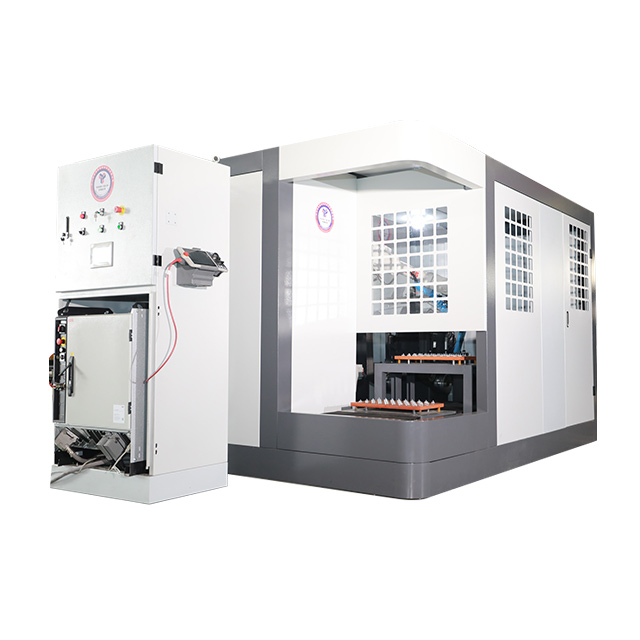
Rotary indexing systems feature a circular configuration. A central dial indexes cookware through multiple peripheral finishing stations. This setup is ideal for medium-to-high volume production requiring a compact factory footprint. The circular design saves valuable floor space. However, these systems are limited by the physical number of buffing heads that can fit around the indexing dial. This limitation restricts the number of sequential finishing steps you can apply in a single cycle.
These machines excel at finishing round, symmetrical parts like frying pans and lids. The central table rotates, presenting the part to a spinning buffing head. You can configure the heads to hit the bottom, the side walls, and the lip of the pan simultaneously. The mechanical indexing must be incredibly precise to prevent the buffing wheels from crashing into the fixtures.
Fully Robotic Polishing Cells
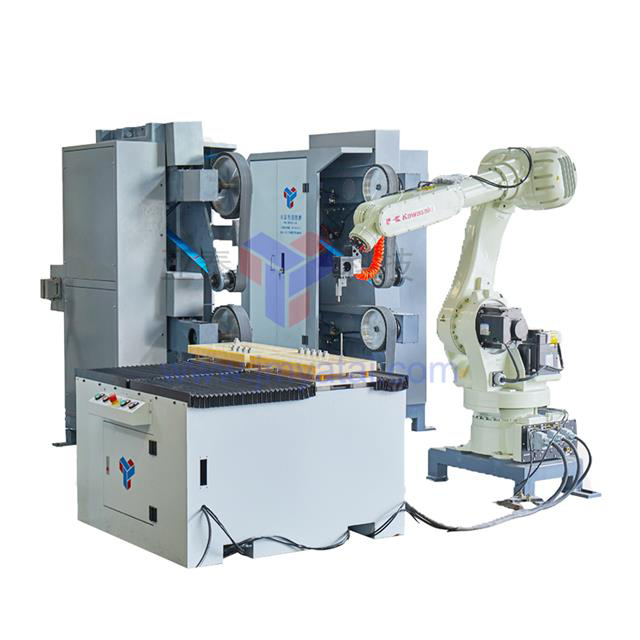
Fully robotic cells utilize 6-axis industrial robots. These robots manipulate either the cookware against static belts and wheels, or they manipulate the finishing tool against clamped cookware. This architecture is perfect for high-mix production and complex geometries like sauciers, curved skillets, and multi-ply clad bodies. Premium lines requiring precise force control benefit greatly from robotic integration. While they require specialized offline programming, robotic cells offer unmatched flexibility and rapid changeovers.
Robots allow you to program complex tool paths that follow the exact contour of a uniquely shaped pan. If you manufacture square griddles or oval roasters, a robot is the only automated way to achieve an even finish into the corners. The robot can articulate the part to keep the buffing wheel perpendicular to the surface at all times.
Architecture Type
Best Application
Primary Advantage
Main Limitation
Typical Footprint
Linear Transfer
High-volume, low-mix
Maximum continuous throughput
Lengthy mechanical changeovers
Very Large (Long)
Rotary Indexing
Medium-high volume, tight space
Compact factory footprint
Limited number of processing stations
Medium (Circular)
Robotic Cells
High-mix, complex geometries
Unmatched flexibility and precision
Requires specialized programming skills
Variable (Modular)
Core Technical Evaluation Dimensions
Evaluating the technical capabilities of a Polishing Line requires looking past basic specifications. You must assess how the equipment handles the physical realities of heavy metal removal and continuous operation. The machine must withstand constant vibration and abrasive dust.
Spindle Power and Active Force Compliance
Consistent pressure is vital for a uniform finish. You must evaluate the necessity of active force control, whether pneumatic or servo-driven. This technology maintains consistent pressure against the workpiece even as buffing wheels inevitably wear down. Additionally, assess the spindle motor kW ratings. Cutting and coloring stainless steel requires heavy pressure. Undersized motors will stall or overheat, leading to inconsistent finishes and premature equipment failure.
When a 24-inch sisal wheel engages a stainless steel pot, the friction generates massive torque resistance. If the spindle motor lacks the necessary horsepower, the wheel RPM will drop. A drop in RPM changes the cutting dynamics, resulting in a cloudy or scratched finish. We always specify oversized motors for stainless steel applications to ensure the wheel speed remains constant under heavy load.
Abrasive Media Application and Auto-Compensation
The method of applying abrasive media drastically impacts both finish quality and consumable waste. Compare solid compound paste bar applicators against high-pressure liquid compound spray guns. Liquid systems often provide more consistent coverage and reduce compound waste. Furthermore, evaluate automated wheel-wear compensation systems. These systems dynamically adjust the buffing head position to account for wheel degradation. This automation eliminates the need for constant manual intervention by operators.
Liquid compound systems require careful maintenance. The abrasive particles suspended in the liquid will quickly erode the spray gun nozzles. You must implement a strict preventative maintenance schedule to rebuild the guns and flush the lines. Failure to do so results in clogged nozzles, dry buffing wheels, and ruined cookware.
Integrated Inline Washing and Degreasing Stages
A flawless finish is useless if it is covered in baked-on residue. Identify how the equipment integrates with downstream ultrasonic washing and chemical degreasing tunnels. Stubborn, high-temperature animal-fat-bound and synthetic-bound pastes must be removed immediately. If left on the metal, these residues bake onto the surface, causing toxic residues and surface cloudiness. Automated inline washing prevents these defects.
The washing process must utilize specific alkaline detergents heated to the correct temperature to break down the binders in the polishing compound. Ultrasonic transducers agitate the water, creating cavitation bubbles that scrub the microscopic crevices of the metal. A final rinse with deionized water prevents water spots before the cookware enters the drying oven.
Dust Extraction and Environmental Compliance
Metal finishing generates hazardous byproducts. You must analyze the integration of wet dust collectors. These systems safely capture stainless steel particulate and highly flammable compound lint. Verify that the extraction system complies with regional combustible dust regulations, such as NFPA 484 or ATEX directives. Proper extraction protects your facility from catastrophic fires and ensures a safe breathing environment for your workforce.
Dry dust collectors are entirely unacceptable for this application. The combination of glowing metal sparks and dry cotton lint is a guaranteed ignition source. Wet scrubbers force the extracted air through a water curtain, instantly quenching sparks and trapping the dust in a sludge tank. You must establish a routine to empty this sludge tank before it solidifies.
Implementation Risks and Mitigation Strategies
Deploying automated finishing equipment introduces specific operational risks. Proactive mitigation strategies ensure a smooth ramp-up and protect your capital investment. You cannot simply plug the machine in and expect perfect parts on day one.
Managing Combustible Dust Hazards
The accumulation of metal dust and compound residue presents a severe risk of factory fires and explosions. This is a safety concern that requires daily attention. To mitigate this hazard, mandate the use of integrated wet scrubbers. Implement strict daily housekeeping protocols to prevent dust buildup on overhead surfaces. Additionally, install automated CO2 fire suppression systems directly within the machine enclosures to extinguish sparks instantly.
Operators must be trained to recognize the signs of inadequate dust extraction. If dust begins accumulating on the machine fixtures or the floor around the cell, the ductwork is likely clogged, or the wet scrubber requires maintenance. Shut down the line immediately and resolve the airflow issue before continuing production.
Upstream Process Variations
Inconsistent deep drawing or stamping processes often leave deep die marks on the cookware blanks. Standard finishing cycles cannot remove these deep gouges within the allotted cycle time. To mitigate this, implement strict quality gates immediately post-stamping. Consider adding a dedicated abrasive belt grinding station at the very start of the line to level out severe surface defects before buffing begins.
You cannot polish out a dent. The automated line assumes every incoming part is dimensionally identical. If the stamping press operator uses too much drawing compound, or if the die is worn, the resulting defects will pass right through the buffing wheels. Upstream quality control is the only way to ensure downstream finishing success.
Handling Aesthetic Rejects and Re-Polishing Loops
Minor surface scratches, compound burns, or micro-pitting can occur during the automated cycle. Discarding the entire workpiece due to a minor defect is highly inefficient. Design a dedicated offline manual or semi-automated bypass loop within the workflow. This allows operators to buff out localized defects and restore the premium mirror finish without scrapping the expensive stainless steel blank.
This rework station should be equipped with variable speed manual lathes and the exact same compounds used on the automated line. The operator can quickly blend the defect and return the part to the washing tunnel. Tracking the frequency and location of these defects provides valuable data for fine-tuning the automated machine parameters.
Operator Training and Changeover Complexities
Complex mechanical adjustments or extensive robot reprogramming can cause prolonged downtime during product changeovers. This reduces overall equipment effectiveness. Specify tool-less quick-change fixtures to speed up mechanical changeovers. Utilize offline programming (OLP) software for rapid robotic cell reconfiguration. OLP allows engineers to program the next batch while the machine is still running the current batch.
Standardize your fixture designs as much as possible. If a single pneumatic gripper can hold three different sizes of saucepans by expanding internally, you eliminate two mechanical changeovers. Train your setup technicians to perform changeovers like a pit crew, staging all necessary tools and programs before the machine stops running.
Conclusion
The optimal architecture depends entirely on your specific volume-to-variety ratio and target surface finish requirements. Assess your current bottlenecks to determine the right path forward. Successfully transitioning to an automated, high-throughput workflow demands a rigorous balancing act between spindle torque capabilities, consistent abrasive dosing, and strict safety protocols.
As a premier global innovator in high-precision surface preparation and turnkey automated finishing systems, Yatai engineers advanced, heavy-duty polishing line solutions tailored explicitly to the strict aesthetic and sanitary standards of the premium cookware industry. Our custom-configured linear, rotary, and robotic systems combine precise servo-driven force compliance with integrated multi-stage inline washing and ATEX/NFPA-compliant wet scrubbers, allowing industrial manufacturers to scale production seamlessly while driving down per-unit consumable overhead.
To implement this technology effectively, follow these actionable steps:
Initiate a technical audit of your current manual or semi-manual finishing bottlenecks to identify exact cycle time deficits.
Request sample processing runs and comprehensive time-studies from top-tier equipment manufacturers using your actual cookware blanks.
Implement strict upstream quality control to ensure stamped blanks meet the dimensional tolerances required for automated finishing.
Establish a preventative maintenance schedule specifically for liquid compound spray guns and wet dust extraction systems.
FAQ
Q: What is the typical cycle time for an automated stainless steel cookware polishing line?
A: Cycle times vary based on cookware size and finish requirements. A standard linear line can process a pot every 10 to 15 seconds. Complex robotic cells achieving premium mirror finishes may take 45 to 90 seconds per piece. The exact time depends on the initial surface roughness and the number of required abrasive stages.
Q: How does a robotic polishing line handle different sizes of pots and pans?
A: Robotic lines handle variations through programmable tool paths and quick-change pneumatic grippers. The robot's 6-axis flexibility allows it to adjust its approach angle and pressure dynamically. Operators simply select the corresponding program for the specific pan size, and the robot automatically adjusts its movements without mechanical retooling.
Q: What is the difference between liquid and solid polishing compounds in automated lines?
A: Solid compounds are applied via mechanical pushers against the wheel, which can lead to uneven application and higher waste. Liquid compounds are sprayed directly onto the wheel via high-pressure nozzles. Liquid systems offer precise dosing, better temperature control, and easier integration with automated cleaning systems.
Q: How do automated lines compensate for the wear of buffing wheels over time?
A: Automated lines use active force compliance systems, such as pneumatic cylinders or servo motors, to maintain constant pressure. Additionally, laser sensors or motor load monitors detect wheel diameter reduction. The machine's control system then automatically advances the spindle closer to the workpiece to compensate for the lost diameter.
Q: Why is wet dust extraction required for stainless steel polishing?
A: The process generates fine stainless steel dust mixed with highly flammable cotton lint and compound residue. Dry extraction systems pose a massive explosion risk. Wet dust extraction forces the particulate through a water bath, instantly neutralizing sparks and preventing combustible dust accumulation, ensuring compliance with safety regulations.